English
 Español

Article Overview: This selection guide helps procurement teams, sourcing managers, and project engineers decide when an automatic three-heads varnish coating machine is justified and when single- or double-head automatic varnishing equipment is the safer first purchase. It uses published machine data and RFQ checkpoints; it does not quote prices, coating chemistry, or guaranteed output.
Which automatic varnishing machine head count should a short-run packaging house choose?
For short-run work, start with one coating head unless a regular share of jobs requires multiple finish layers. Choose two- or three-head versions when recurring orders need a base, gloss, or protective layer in-line.
Short-run packaging houses usually feel capacity limits during changeover, not at maximum line speed. When the coating material changes, rollers, varnish feeders, and pan areas require cleaning. More coating heads mean more wetted parts to wash, so the coating-layer demand in the weekly order mix should be the starting point.
- Recurring layer count: Track how many jobs require one, two, or three varnish applications over a realistic month.
- Substrate data: Record minimum sheet size, grammage, and whether thin-paper or thick-paper versions are relevant.
- Changeover frequency: Estimate coating changes per week and time needed for each cleaning event.
- Written finish requirements: Note gloss, wear, moisture, or rub expectations from customers.
Hypothetical scenario: if a packaging house runs 80 one-coat jobs and 20 two-coat jobs per month, a machine with additional heads will help only if those two-layer jobs cause unacceptable delays on a single-head line. If the layered work is rare, a planned second pass may be more realistic than buying extra coating stations.
Review the head-count question after sorting jobs by coating function, not only by paper size. A short-run buyer who owns a line with more heads than the order book needs will still pay for the extra stations through longer cleaning routines and higher exposure to operator error.
What can an automatic three-heads varnish coating machine do that single-head machines cannot?
An automatic three-heads varnish coating machine can apply more than one coating function in line before the finished sheet leaves the coating section. A single-head machine can still produce layered finishes only through additional passes and handling.
Three heads become useful when a product specification combines several surface requirements, such as moisture resistance and wear resistance with gloss. In an in-line sequence, one head can deposit a primer or sealing layer, another can build coating depth, and another can apply the top effect. Which head does which work depends on the machine application rollers, drying stages, and the varnish material.
Paper range does not automatically increase with head count. In product data for this three-head series, thick-paper machines are listed for 200 to 600 g/m², while thin-paper machines cover 100 to 600 g/m², and the minimum sheet size is 350 by 350 mm. Put those values in your RFQ rather than assuming a multi-head frame accepts every job.
Hypothetical example: a 300 g/m² folding carton requiring a base coat and a wear-resistant top coat is a two-layer job. On a three-head machine made for thick paper, both layers can be applied in one pass if the installed curing capacity is adequate. On a single-head line, the same carton needs a second pass or an additional coating sequence.
If most of your output is one-coat work, review the single-head automatic UV coating machine product page before adding heads, because a larger coating machine still has to process short one-coat orders efficiently.
Ask the supplier to explain the intended role of each coating head for your most common products. If the proposed sequence does not match the finish requirements in your order book, the number of heads is not the deciding factor.
Do double-heads UV oil varnish coating machines suit high-gloss and abrasion jobs?
Double-head UV oil varnish coating machines can suit high-gloss and abrasion work when acceptance trials confirm the result on your substrate. Two coating stations allow one layer to control absorbency while the second supplies gloss and surface strength.
Head count alone is not a coating guarantee. A double-head machine can be the practical configuration when the first station levels the paper and the second station applies the gloss layer. The final result will also depend on paper, ink, UV curing balance, and the varnish product, so require a test on production-representative stock.
Single-head
A practical baseline when one finish covers most orders and occasional two-layer work can be scheduled as a second pass.
Double-head
Relevant for recurring gloss-and-wear jobs where two coating functions must be applied before the curing section.
Three-head
Relevant for products that consistently need base, intermediate, and top layers across a wider substrate range.
Do not make the buying decision from product names. A gloss-and-abrasion requirement is a specification; the supplier should match a coating sequence to it and prove the result. Start the technical comparison with the double-heads UV oil varnish coating machine product page and then ask for coated samples made from your carton.
When you write the RFQ for a double-head configuration, separate the coating coverage requirement from the final surface requirement. State the substrate grammage, the target coating build, and the drying or curing stages that are expected between the heads.
How does head configuration affect output on an automatic varnishing line?
Adding coating heads changes what can be done in one pass, not the maximum speed of the line. Usable output is determined by sheet format, coating layer count, curing capacity, and wash-up time between jobs.
The published three-head line speed in this product family is 10 to 100 m/min. That figure states mechanical capability, not confirmed throughput. At the same sheet size, varnish type, and drying capacity, a single-head line and a three-head line can finish a one-coat job at nearly the same speed; the multi-head line becomes productive when every sheet needs two or three functional coatings.
Step 1: Classify the order book by coating layers
Divide the monthly plan into one-coat, two-coat, and three-coat jobs so the head count matches the recurring workload.
Step 2: Request a cycle-time calculation
Send sheet size, grammage, layer count, varnish type, and estimated number of changes, and ask for sheets per hour or shifts per order instead of brochure speed.
Step 3: Include changeover in the acceptance test
Agree on a wash-up procedure and a target time for coating changes before the equipment trial begins.
Step 4: Run a representative production trial
Apply the actual coating material to thin and thick sheets and check coverage, gloss, adhesion, and rub resistance on every head configuration under consideration.
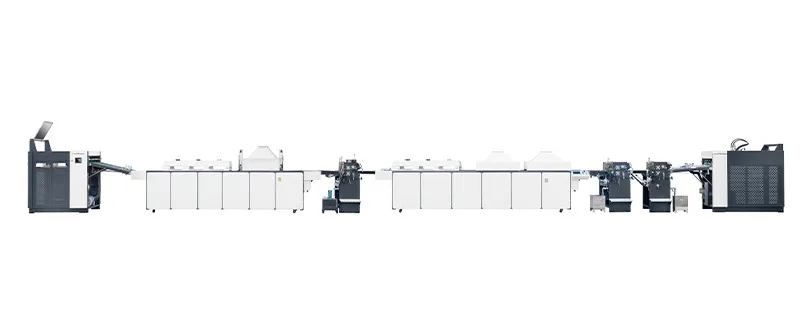
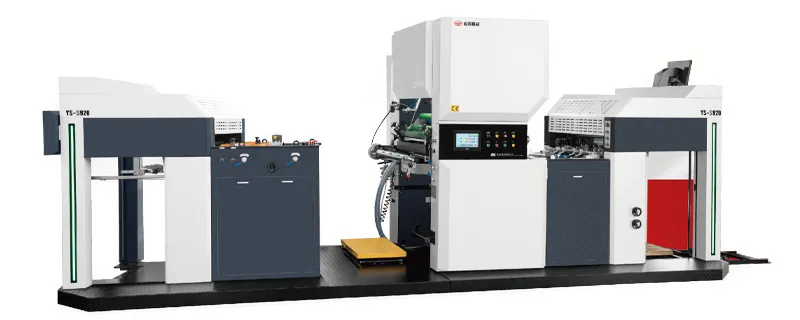
For an RFQ aimed at an in-line multi-station unit, compare the frame-size options on the automatic three-heads varnish coating machine product page and specify the model code that fits your stock range and format.
When the plant changes varnish several times per shift, the number of coating heads can affect total throughput as much as line speed. Request declared cleaning times, check how each head is accessed, and factor those steps into expected shift output.
Also confirm that the curing section has enough capacity for the coating sequence you intend to run. A coating head is only useful if the next layer can be applied without disturbing the previous layer.
FAQ
Does head count change the range of paper weights a varnish machine can handle?
Head count and paper-range handling are separate engineering choices. In the referenced three-head product family, thick-paper machines are rated for 200 to 600 g/m² and thin-paper machines for 100 to 600 g/m², with a 350 by 350 mm minimum sheet size. State your stock grammage and finished sheet dimensions in the RFQ so the supplier proposes the correct transport and feeder system.
Should a multi-head varnish machine RFQ include wash-up time?
Yes. State how many coating changes are expected per week and include a target changeover time per cleaning event. This parameter often limits short-run output more than line speed. Ask each supplier to describe the cleaning procedure and to confirm that the acceptance trial includes at least one varnish change.
Can a double-head machine substitute for a three-head machine when a job needs three layers?
Usually not in a single pass. A double-head unit has two coating stations and can apply two sequential coating layers; a third layer would require a second pass or an additional drying stage. Map customer products to required coat count before deciding. Confirm any proposed sequence with a supplier trial.
Conclusion: choose the coating head count your work actually repeats
The buying decision should follow the monthly order book, not maximum brochure speed. Start with a single-head machine if most jobs need one coating; move to double-head when high-gloss and abrasion requirements arrive together; select an automatic three-heads varnish coating machine when layered finishes are routine across thin and thick stock. Quantify coating layers and changeovers in the RFQ, validate with a substrate trial, and make final acceptance depend on demonstrated results.