English
 Español

Article Overview: This article gives CTOs, technical architects, procurement teams, and evaluation committees a comparison framework for hot knife vs disc knife film laminating machine cutting systems, with chain knife as a third option for window-style or water-based workflows. The core question is which cutter fits the buyer's film mix, substrate range, edge-quality target, and run profile. The evidence boundary is the manufacturer's published product categories; the direct conclusion is that no cutter wins universally, and hot knife is the indicated match for pre-coated or non-adhesive film and clean edges, while disc and chain cutters must be validated against the converter's actual mix.
Hot Knife vs Disc Knife Film Laminating Machine: How Do Cutting Systems Differ?
Hot knife cutting uses a heated blade and is described for clean trimming of OPP, PET, and PVC; disc knife cutting is a rotary option associated with high-speed automatic finishing. Inspect the fitted cutter rather than inferring edge quality from line speed.
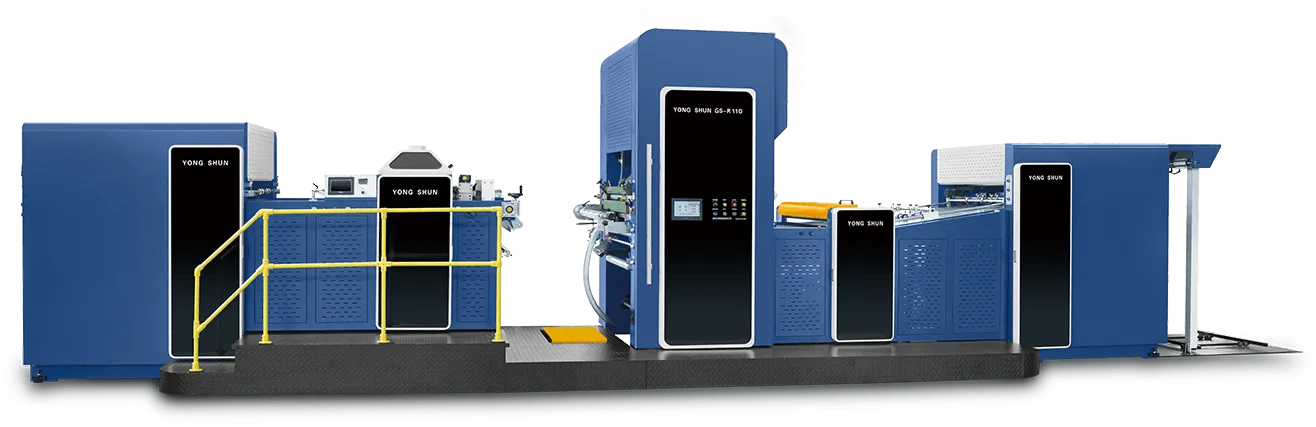
Within the published product line for automatic film laminating machines, hot knife and disc knife appear as separate variants, not as interchangeable trimmer heads on one chassis. The hot-knife configuration is described with easy adjustment and high precision on films including OPP, PET, and PVC, while the high-speed disc knife configuration is named around automatic, sustained output. Category guidance also associates hot knife with clean cutting edges, PET film, and cardstock-heavy applications such as luxury packaging or rigid boxes.
Cutter profile comparison
Hot knife: heated blade cutting; listed targets include OPP, PET, and PVC; category guidance pairs it with clean edges, PET film, and cardstock-heavy finishing.
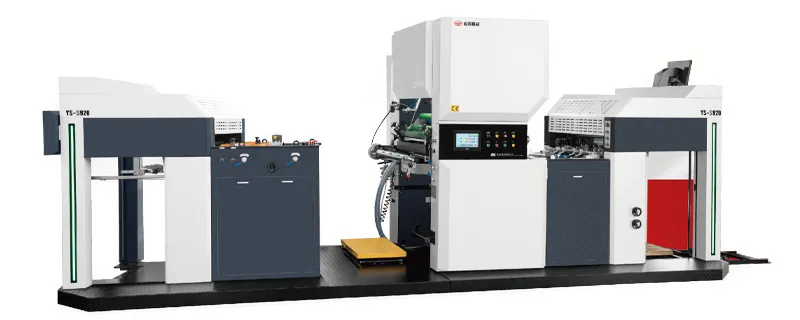
Disc knife: rotary cutter on high-speed automatic models; product naming emphasizes speed and automation, so confirm edge quality on your own films.
Buyer note: edge quality and changeover control, not rated speed, are the dimensions that separate these two blade families.
When comparing alternatives, score them on the actual job family: film type, substrate stiffness, finished-edge visibility, lamination method, and average run length. Those criteria, rather than model names, determine whether hot knife or disc knife belongs on the inquiry list.
Which Cutter Is More Reliable for Pre-Coated and Non-Adhesive Film Lamination?
For pre-coated film and non-adhesive film, a hot knife laminator is the explicitly named configuration in this product series. A disc knife may also cut these films, but edge quality must be proven on your rolls.
The clearest evidence is structural. One listed laminating machine is described as a hot-knife type for pre-coated film and non-adhesive film, whereas other automatic models are grouped by lamination method or speed, such as water-based, servo, or disc knife. That distinction is not a warranty, but it tells a procurement team which cutter the manufacturer has paired with a film family in its standard offer.
Define reliability operationally before choosing. Does the cutter separate cleanly across the full sheet width, leave no uncut tails at operating speed, and hold its setting across a shift? Obtain a trial with your own pre-coated and non-adhesive rolls instead of accepting a generic compatibility chart.
For that comparison, a practical first screen is to review the product description of the automatic hot knife film laminating machine against your film roll specification and ask whether the standard cutter setup already matches the intended duty.
Is Chain Knife Cutting a Better Fit for Water-Based Multi-Purpose Laminators?
Chain knife cutting should be evaluated only where the machine offers it, usually as a heat-or-chain option on high-speed window laminators. Water-based multi-purpose models are defined by adhesive method, so verify cutter position and changeover sequence before treating chain as better.
The published product families do not state that every water-based laminator uses a chain knife. One category line describes a high-speed automatic window laminating machine with heat-cutting and chain-cutting options; another describes a water-based multi-purpose automatic laminator. These groups can overlap in workflow, but the cutter arrangement and the changeover procedure are not the same unless the supplier documents them.
- Water-based multi-purpose laminator
- Positioned by adhesive method rather than by cutting system. Cutter fit must be evaluated inside a workflow that also includes adhesive, drying, and film-roll changeovers.
- High-speed automatic window laminator with heat or chain cutting
- This is the catalog area where chain-knife cutting is actually presented as an option. Evaluate chain when patch positions vary and changeover frequency is high.
Use changeover as the concrete test. What changes when the operator moves from one patch width or paper thickness to another? What sequence aligns the chain knife, and what tolerance can it hold across a shift? If the supplier cannot document those points, a chain-knife benefit is unproven for your job mix.
Chain knife is not a universal fit for every water-based line. If full-surface PET lamination on thick paperboard with strict edge appearance is the core output, run the hot-knife candidate side by side before ordering a chain option.
Which Cutting System Should a Packaging Converter Choose for an Automatic Film Laminating Machine?
Match the cutter to dominant film, substrate weight, edge-quality target, lamination method, and run length: hot knife for PET, thick cardstock, and pre-coated or non-adhesive film; disc knife for long volume runs; chain knife when frequent changeovers drive workflow.
Before comparing machines, build a job-mix matrix in your own operations language. For the three products with the highest weekly volume, record film family, lamination method, substrate weight, sheet size, and edge-defect tolerance. Those fields keep the cutter conversation tied to production rather than to naming conventions.
Decision flow for cutter selection
Step 1: Separate by lamination method. Identify thermal pre-coated, water-based adhesive, non-adhesive, and window-film work. The cutter must fit the inlet and exit conditions of that method even though it does not define the chemistry.
Step 2: Score edge appearance. If the finished edge will be visible or die-cut later, include a hot-knife candidate in the list because the category guidance links hot knife to clean edges, PET film, and cardstock applications.
Step 3: Compare throughput against stops. For long, same-film runs where continuous speed is the bottleneck, evaluate an automatic high-speed disc knife candidate. For plants with many SKUs and frequent set-ups, compare changeover time and cutter repeatability rather than published peak speed.
Step 4: Make the RFP force a side-by-side answer. Require each vendor to state film family, substrate range, lamination method, and cutter type in one table, then run samples on the converter's own stock before ordering.
Once that matrix is complete, use the automatic film laminating machine product line to see how the manufacturer groups lamination methods with cutter options before requesting a custom configuration. Treat the automatic high-speed disc knife laminating machine as a separate candidate only after its auto-feed, cutting, and stacking duties are reconciled with your sheet size, edge tolerance, and changeover frequency.
FAQ
Can a single machine switch between hot knife and disc knife cutting?
Do not assume interchangeability. The manufacturer presents the hot-knife laminator and the high-speed disc knife laminator as separate product variants. If a proposal claims a switchable head, ask for the documented cutter-change procedure and evidence that feed, heating, and frame tolerances remain unchanged after conversion.
Does film type make hot knife cutting necessary for laminating?
For OPP, PET, and PVC, the hot-knife description names those films as its intended processing range. Necessity still depends on the specific machine and the job. Treat the compatibility statement as an entry criterion, not a guarantee, and verify edge continuity with samples of your actual film and substrate.
Should chain knife be selected for every short-run job?
No. Chain knife is documented as an alternative on a high-speed automatic window laminator with heat-or-chain options. Short-run or SKU-heavy work benefits only if the chain width, feed, and changeover procedure fit that work. Score setup time and cutter repeatability, not the knife name alone.
Conclusion: Choose by Job Profile, Not by Cutter Name
No single hot knife, disc knife, or chain knife configuration fits every automatic film lamination workload. In the manufacturer's published portfolio, hot knife is the indicated configuration for pre-coated and non-adhesive films, PET, thick cardstock, and visible finished edges; high-speed disc knife suits output-oriented lines once edge behavior is validated; chain knife fits mixed or window-style work when the machine documentation demonstrates a workable changeover.
For a packaging converter, keep the evaluation process stable: define the film and substrate mix, set edge and speed targets, obtain cutter descriptions tied to each lamination method, and complete a documented production trial on your own materials before purchase.