English
 Español

Article Overview: This article explains the design, operation, and advantages of a double drying channels automatic varnishing machine. It details how dual drying zones—commonly infrared and ultraviolet—enable faster curing, higher throughput, and improved coating quality compared to single-channel alternatives. The discussion covers machine specifications, typical applications in print finishing, and key selection criteria for procurement teams. Readers will gain a comprehensive early-stage understanding of this equipment category.
How does a double drying channels automatic varnishing machine work?
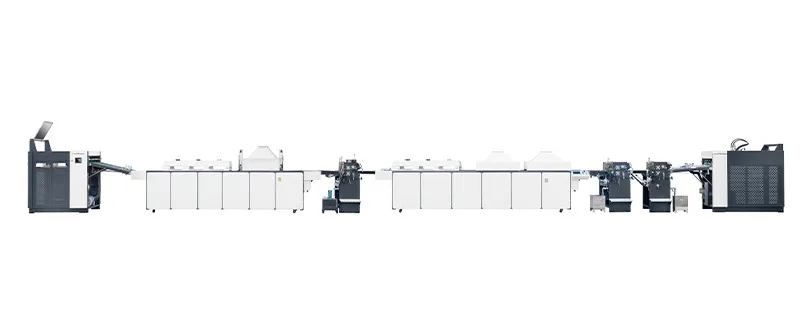
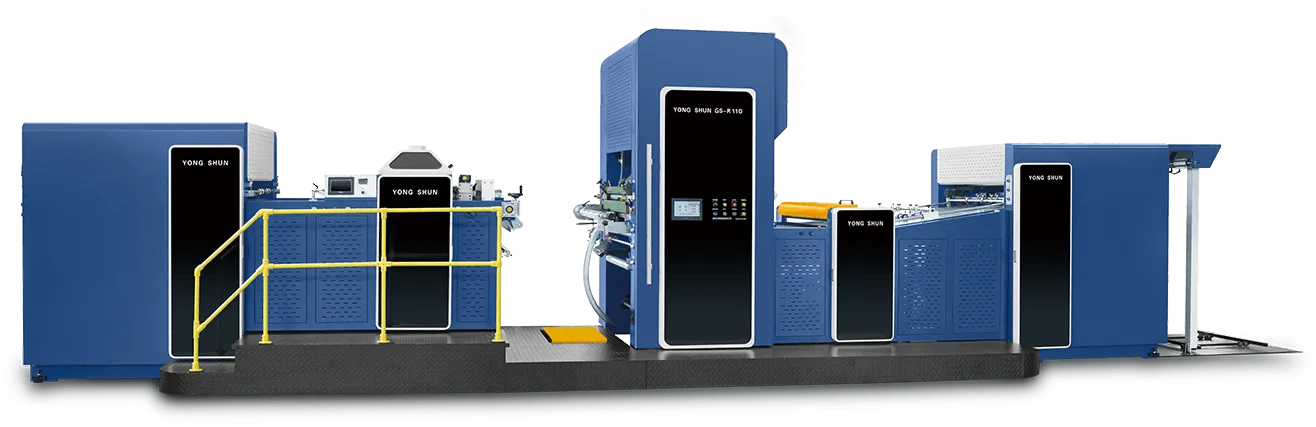
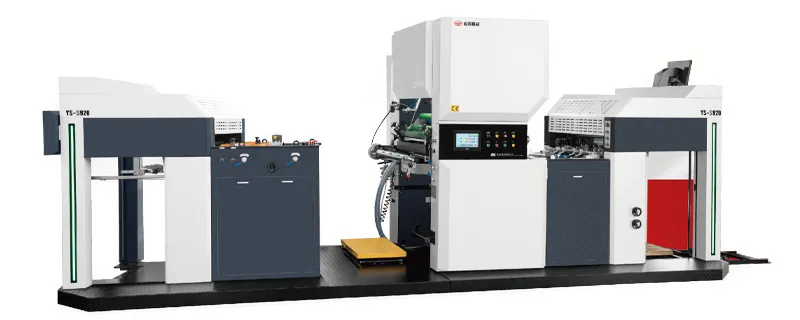
A double drying channels automatic varnishing machine applies a liquid varnish—water-based, solvent-based, or UV-curable—to printed paper or board, then passes the coated sheet through two distinct drying sections. The dual-channel design separates the drying process into sequential phases: a preliminary drying stage (e.g., infrared or hot air) followed by a final curing stage (typically UV). This staged approach reduces overall processing time and improves adhesion and surface hardness. The typical workflow involves the following steps:
Step 1: Automatic sheet feeding and alignment
Sheets are lifted from a stack using a suction feeder and transported via conveyor belts. Precision side guides or vacuum belts align each sheet before it enters the coating section, ensuring consistent varnish laydown relative to print registration.
Step 2: Varnish application
A rubber-coated roller transfers a controlled film of liquid varnish from a reservoir onto the sheet. The coating thickness is adjustable via doctor blade pressure or roller gap settings. Typical wet film thickness ranges from 3 to 15 micrometers, depending on gloss and barrier requirements. Both roll coating and curtain coating methods are available in different machine models.
Step 3: First drying channel (pre-dry)
The coated sheet enters the first drying zone, often equipped with infrared lamps, forced hot air, or a combination. This channel removes excess solvent or water, initiating polymerization in UV systems and reducing the tack of the coating. Controlled temperature and airflow prevent substrate curling.
Step 4: Second drying channel (final cure)
The sheet then passes through a second zone, typically with UV lamps that fully cure the varnish. The dual sequence (e.g., IR+UV) allows higher line speeds than a single UV pass because the pre-dry stage delivers a more receptive coating surface. Some machines use two UV channels for thick coatings.
Step 5: Stacking and post-treatment
Cured sheets are automatically stacked at the delivery end, often with interleaving paper if needed. Some models include an inline inspection system to detect coating defects such as pinholes, streaks, or uneven gloss.
What key specifications should you evaluate when selecting a double drying channels automatic varnishing machine?
When comparing machines from different manufacturers, consider the following parameters that directly affect performance and compatibility with your production:
- Drying channel configuration: Common combinations include IR+UV, hot air+UV, or UV+UV. Each affects energy use, drying speed, and varnish compatibility. IR and hot air work with water-based varnishes; UV channels require UV-curable formulations.
- Maximum sheet size and substrate range: Typical machines handle sheets from 600×900 mm up to 1200×1600 mm, with board thickness up to 600 g/m² or 4 mm corrugated. Ensure the machine supports your current and future product sizes.
- Coating method and uniformity: Roll coaters (flexo or gravure) are most common; they provide 90–98% uniformity across the sheet. Curtain coaters offer higher uniformity for special applications but at lower speed. Ask for uniformity test data from the supplier.
- Mechanical speed: Rated in sheets per minute (e.g., 60–80 sheets/min) or linear speed (10–30 m/min). Dual drying channels enable faster speeds because the coating cures faster than in single-channel designs.
- Varnish recovery and cleaning system: Automatic filtration and recirculation reduce varnish waste and downtime for cleaning. Some machines include self-cleaning rollers.
- Energy consumption and footprint: IR and UV lamps draw significant power. Check total installed power and compare with single-channel alternatives. The physical length of the machine is typically 2–4 meters longer due to the dual drying zones.
For a detailed product specification list, refer to the double drying channels automatic varnishing machine solution page.
What are the main applications for a double drying channels automatic varnishing machine?

These machines are used in the finishing stage of printed products where gloss, abrasion resistance, moisture barrier, or tactile enhancement is required. Common applications include:
- Premium packaging: Cosmetics, electronics, and luxury goods packaging that require high-gloss and durable surfaces.
- Book covers and folders: Varnishing improves scuff resistance and extends product life during handling and shipping.
- Labels and tags: UV varnish provides chemical and rub resistance for retail and industrial labels.
- Postcards and greeting cards: Enhanced visual appeal and a premium feel.
- Folding cartons: Spot or overall varnishing as a cost-effective alternative to lamination.
To explore more application scenarios, visit the applications overview for industry-specific solutions.
How does dual-channel drying improve production efficiency and coating quality?
Compared to a single-drying-channel machine, the double-drying configuration offers measurable gains in both speed and consistency. The following comparison illustrates typical differences:
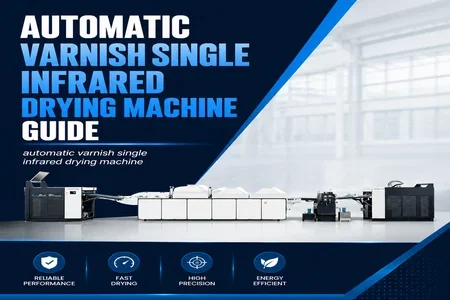
Single Drying Channel vs. Double Drying Channels
Single Drying Channel: One IR or UV zone. The machine must run at slower speed to allow full cure in one pass, or the coating thickness must be reduced. This limits productivity for high-opacity coatings that require longer cure times. Residual solvent or incomplete cure can cause blocking (sheets sticking) or odor.
Double Drying Channels: Two sequential zones (e.g., IR then UV). The first zone pre-dries or partially cures the coating, so the second zone finishes the job at higher line speed. The result is typically a 30–50% increase in throughput (sheets per hour) while maintaining or improving coating quality. Additionally, the staged process allows thicker coatings to be applied because the pre-dry step removes moisture before UV curing.
Besides speed, dual channels improve consistency. The pre-drying stage stabilizes the coating surface, reducing the risk of pinholes or orange-peel texture. UV curing in the second zone delivers high crosslink density, leading to superior scratch and chemical resistance. For operations running multiple shifts, the combination of higher speed and more consistent cure quality translates into lower per-unit finishing costs and fewer rejects.
Consider a hypothetical scenario: A print finisher currently uses a single-channel UV varnisher running at 40 sheets/min for 350 g/m² board. By upgrading to a double drying channels automatic varnishing machine with IR pre-dry and UV final cure, the line speed can increase to 55–60 sheets/min, effectively raising capacity by over 35% without additional labor. The higher throughput can justify the investment within 12–18 months for medium-volume operations.
FAQ
What is the typical coating thickness range for a double drying channels varnishing machine?
Coating thickness is adjustable from 3 to 15 micrometers wet film. For water-based varnishes, the thickness is often limited by drying capacity; dual channels allow thicker coatings because the first channel removes water before UV curing in the second channel.
Can the machine handle both UV and water-based varnishes?
Many double drying channel machines are designed as combination IR+UV systems, enabling both water-based (IR-dried) and UV-curable (UV-cured) varnishes. It is important to verify that the varnish formulation is compatible with the lamp wavelengths and temperatures used. Some machines include interchangeable lamp cassettes.
What maintenance is required for the drying channels?
IR lamps and UV bulbs need periodic replacement based on operating hours (typically 800–1500 hours for UV). Lens cleaning is necessary to maintain full UV output. Air filters and exhaust vents should be cleaned weekly to prevent overheating. Manufacturers provide detailed maintenance schedules in the manual.
How does dual drying affect energy consumption compared to single channel?
Energy consumption can be higher due to two lamp sets, but total energy per sheet often decreases because the higher speed reduces run time. For a typical 500-sheet job, the total energy per sheet may be 10–20% lower with dual channels due to faster throughput and optimized lamp power profiles.
Conclusion
The double drying channels automatic varnishing machine addresses a core challenge in print finishing: achieving high-gloss, durable coatings without sacrificing production speed. By splitting the drying process into two sequential stages—typically pre-drying and UV curing—these machines enable faster line speeds, better coating uniformity, and greater flexibility in varnish selection. For decision-makers evaluating finishing equipment, understanding the drying channel configuration, coating method, and substrate compatibility is essential to selecting a machine that meets both current and future production demands. The efficiency gains and quality improvements make double drying channel machines a compelling upgrade for print shops aiming to increase capacity and reduce per-unit costs.