English
 Español

Article Overview: This comprehensive guide explains the operation, advantages, and selection criteria for an automatic three heads varnish coating machine. Written for technical buyers and production managers, it covers how three-head configurations enhance coating uniformity, throughput, and material versatility. Readers will gain practical knowledge to evaluate these machines for their finishing lines.
What Is an Automatic Three Heads Varnish Coating Machine?
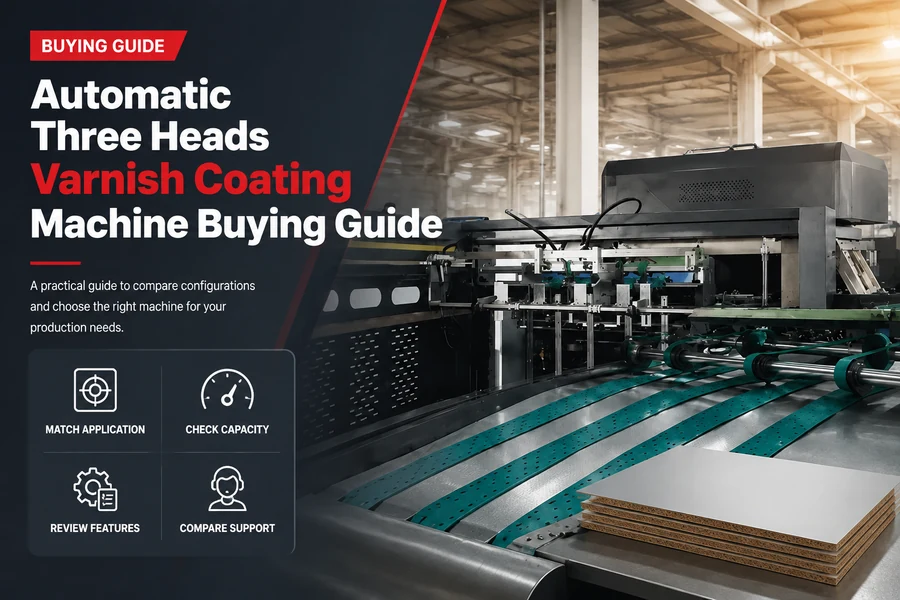
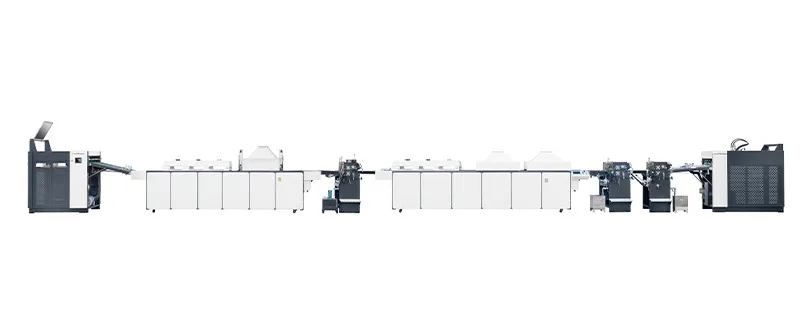
An automatic three heads varnish coating machine is an advanced finishing system used primarily in printing and packaging. It applies a thin, even layer of varnish—oil-based, water-based, or UV-curable—onto paper, cardboard, and other flat substrates. The term “three heads” refers to three independent coating stations that can operate together or in sequence. Each head contains a rubber coating roller, a metering roller, and a doctor blade assembly to control film thickness precisely. Sheets are fed automatically, passed through each coating section, and then dried via infrared or UV lamps before stacking. This automation ensures consistent quality and high throughput while reducing manual intervention. Typical speed ranges from 60 to 80 sheets per minute, depending on substrate and varnish type.
Why Choose a Three-Head Design for Varnish Coating?
A three-head design solves common production challenges: achieving uniform coverage at high speeds, switching between varnish types without delays, and minimizing waste. Here are the main benefits:
- Multi-layer application in one pass: Apply a base coat, effect coating, and protective top coat sequentially without stopping the machine. This eliminates re-handling and reduces cycle time.
- Independent drying zones: Each head can have its own drying parameters (temperature, UV intensity) to match the specific varnish chemistry, preventing defects like blistering or incomplete curing.
- Redundancy and flexibility: If one head needs maintenance, the other two can continue production. Operators can also program heads for simultaneous coating to build thick layers quickly.
- Superior uniformity: Each head is independently adjustable, so thickness variation across the sheet can be kept within ±2 µm, much tighter than single-head alternatives.
These features make the automatic three heads varnish coating machine a valuable upgrade for shops that demand high-quality finishes and fast changeovers. For packaging jobs requiring multiple coatings, this configuration reduces waste by up to 15% compared to single-head lines.
How Does the Coating Process Work Step by Step?
The operation of an automatic three heads varnish coating machine follows a systematic workflow. Below is a typical sequence for a two-sided gloss and matt combination job:
Step 1: Sheet Feeding and Alignment
A suction feeder or friction feeder picks sheets from a stack and aligns them precisely using side lays and front stops. The feeder accommodates sheet sizes from 350×500 mm up to 1200×1600 mm, with thickness ranging from 80 gsm to 500 gsm. Sensors detect any misfeeds to avoid jams, and the controller adjusts feed speed for optimal stack separation.
Step 2: Coating Application at Head 1 (Base Coat)
The sheet enters the first coating head. A rubber roller picks up varnish from a metering roller, and the doctor blade ensures a precise film thickness of 8–12 µm. The coating is transferred to the sheet. Here, a white or clear base coat is applied to enhance opacity or provide a smooth foundation. The head’s roller pressure and speed are set independently.
Step 3: Coating Application at Head 2 (Effect or Color Coat)
The sheet then moves to the second head. This station applies a tinted varnish, metallic effect, or textured coating. For example, a pearlescent finish for cosmetic packaging. The operator adjusts the doctor blade gap and roller speed to achieve the desired effect thickness, typically 6–10 µm. A separate varnish supply line prevents cross-contamination.
Step 4: Coating Application at Head 3 (Protective Top Coat)
The third head applies a final protective layer, usually a scratch-resistant UV varnish or a matt finish. The film thickness is controlled to 10–15 µm. Drying can be done immediately after each head or after all three. In many machines, each head has its own drying zone (IR or UV), allowing the base coat to be semi-dried before the next layer.
Step 5: Final Drying and Curing
After all coatings, the sheet passes through a drying tunnel. Depending on varnish type, drying uses hot air, infrared radiation, or UV light. The machine can adjust temperature and UV intensity per zone. For water-based varnishes, longer IR drying may be needed; UV varnishes cure instantly under UV lamps. Proper drying ensures no smudging or blocking in the stacker.
Step 6: Stacking and Inspection
Dried sheets are collected in a self-leveling stacker with adjustable pressure to prevent marking. The stacker can handle high pile heights, minimizing operator intervention. Some machines include a conveyor for inline inspection using vision systems that detect coating flaws.
This automated process reduces labor and rework, making the automatic three heads varnish coating machine ideal for continuous production. The entire cycle from feeder to stacker is controlled by a PLC with touchscreen interface, allowing recipe storage for quick job changeovers.
What Are the Key Applications for This Machine?
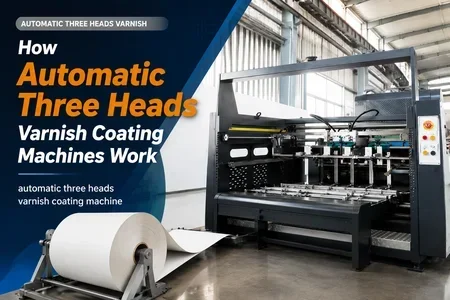
The automatic three heads varnish coating machine is used across industries that require durable, attractive finishes on printed materials. Common applications include:
- Cosmetic and luxury packaging: High-gloss UV varnish for boxes, cartons, and displays that demand visual impact. Multi-layer coatings allow metallic effects under a clear top coat.
- Book covers and brochures: Protective matt or satin finishes that resist scuffs and fingerprints. Double-sided coating is possible with appropriate machine configuration.
- Labels and tags: Spot varnishing for contrast and texture, often with multiple varnish types in one pass.
- Food packaging: Water-based varnishes that meet food contact safety standards, applied with consistent thickness. The three-head setup can apply a barrier layer between ink and food.
- Paperboard displays: Heavy coatings for additional rigidity and a premium look. Some machines can apply up to 40 µm total coating in one pass.
The machine handles substrates from thin paper to thick board, and varnish viscosities from low-solvent UV to high-solids aqueous. Always verify the manufacturer’s substrate range for your specific job mix. For a deeper look at application-specific setups, explore our Solutions page that details packaging and print finishing workflows.
How Do You Select the Right Automatic Three Heads Varnish Coating Machine?
Choosing the best machine for your operation requires a structured approach. Consider the following evaluation phases:
Phase 1: Define Coating Objectives
List the varnish types you plan to use (UV, water-based, solvent-based) and required film thickness. Also note any special effects like spot coating or pearlescent finishes. This determines whether you need a three-head configuration and what drying systems are essential. For example, if you only ever use one varnish type, a single-head machine might suffice, but if you need to layer different chemistries, three heads provide flexibility.
Phase 2: Assess Throughput Requirements
Calculate your average monthly output in sheets or square meters. Compare with the machine’s rated speed, typically 60–80 sheets per minute for standard sizes. If you run multi-layer jobs, sequential coating may reduce effective speed, but still outperforms single-pass single-head machines. For high-volume operations, look for machines with automated cleaning and quick-change doctor blades to minimize downtime.
Phase 3: Check Physical and Utility Fit
Measure floor space: machine length includes feeder, coating section, drying tunnel, and stacker—typically 8–15 meters. Verify power supply (often 380V/50Hz three-phase) and compressed air availability (6–8 bar). For solvent-based varnishes, ensure proper ventilation and explosion-proof components are in place. Water and drainage may be needed for cooling or cleaning systems.
Phase 4: Evaluate Support and Service
Check availability of spare parts, remote diagnostics, and training. A good supplier offers on-site commissioning and maintenance programs. Look for machines with accessible components to simplify cleaning and roller changes. Also consider the longevity of drying lamps (typically 1000–2000 hours) and whether replacements are easy to source.
By following these phases, you can match the automatic three heads varnish coating machine to your production needs. For specific specifications, refer to the manufacturer’s data sheets and request a sample run with your own materials. The right machine will pay for itself through reduced waste and increased capacity.
FAQ
What should buyers evaluate first about automatic three heads varnish coating machine?
Start with fit, evidence-backed requirements, and supplier proof relevant to automatic three heads varnish coating machine before shortlisting vendors.
How can teams reduce procurement risk for automatic three heads varnish coating machine?
Use structured comparison, validate specifications early, and review implementation or quality checkpoints with documented evidence.
Related articles
- Automatic Varnishing Machine: Buyer's Comparison Guide
- Double Drying Channels Automatic Varnishing Machine
- Double Heads UV Oil Varnish Coating Machine
Conclusion
The automatic three heads varnish coating machine is a powerful tool for finishing operations that need speed, quality, and flexibility. By understanding its working principles, application range, and selection criteria, buyers can make informed decisions that boost productivity and product appeal. Evaluate your coating objectives, throughput needs, and facility constraints to find the best fit. For further details on the automatic three heads varnish coating machine approach, consult technical documentation from reliable manufacturers and request a demonstration to validate performance with your specific materials.