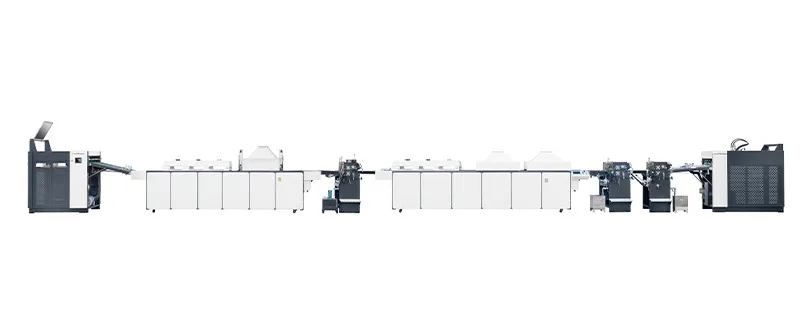
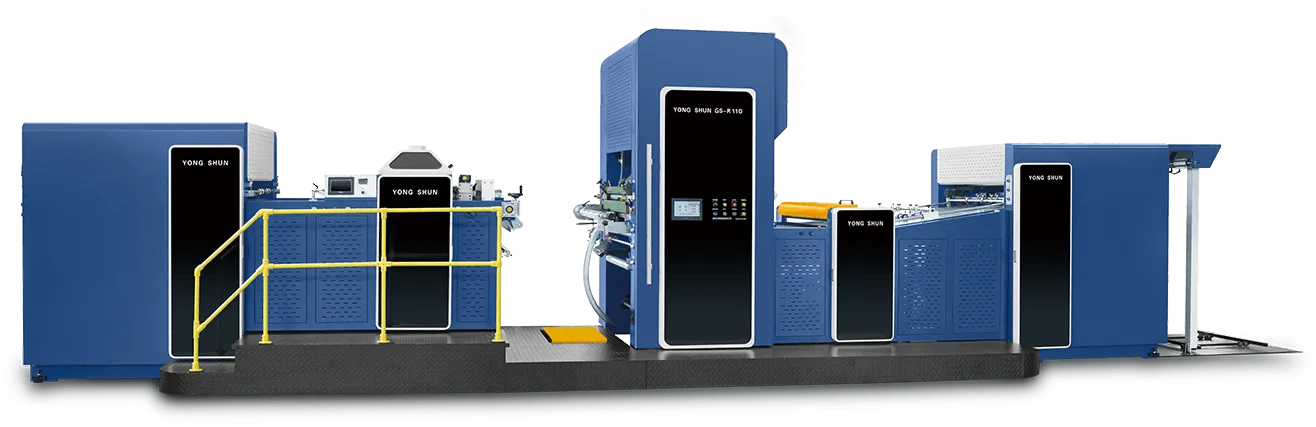
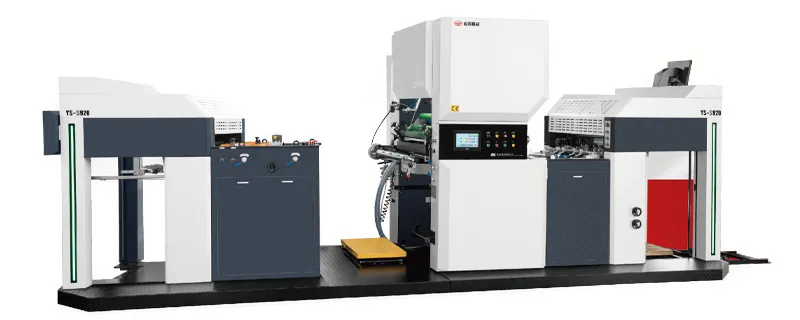
English
 Español

Article Overview: This article provides a neutral comparison of automatic varnishing machine configurations—single vs. multi-head, UV vs. infrared drying, and single vs. double drying channels. It offers evaluation criteria for CTOs, technical architects, and procurement teams to select the right machine for their production needs.
What Are the Core Configurations of an Automatic Varnishing Machine?
An automatic varnishing machine applies a protective coating onto printed sheets to enhance gloss, durability, and moisture resistance. The primary configurable components are the number of coating heads and the drying system. Understanding these variables is the first step in a comparison.
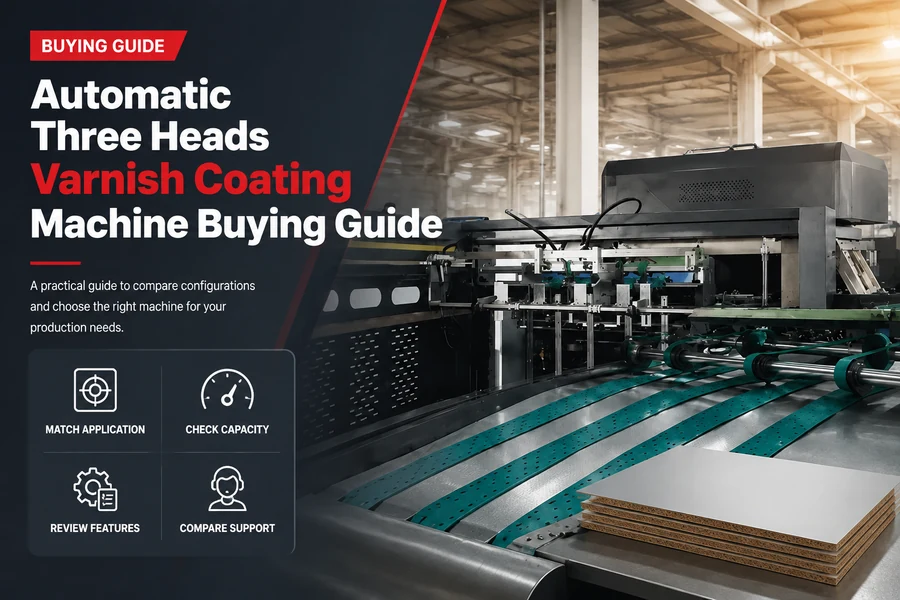
- Coating heads: Single-head, double-head, and three-head configurations determine the number of varnish layers applied in one pass and affect throughput, gloss level, and the ability to combine different coating types (e.g., UV and aqueous).
- Drying channels: Single-channel machines use one drying zone; double-channel machines provide two separate drying stages, often combining UV and infrared or offering extended curing time for better gloss and hardness.
- Drying method: UV curing uses ultraviolet light for instant drying, ideal for high-gloss finishes. Infrared (IR) drying uses heat and is suited for water-based varnishes or papers that cannot withstand high UV exposure.
The table below summarises typical specification ranges across common configurations. Numbers are based on manufacturer data; always validate against your specific model.
| Criterion | Single head, UV | Double head, UV+IR | Three head, UV+IR double channel |
|---|---|---|---|
| Maximum sheet width | Varies by configuration (e.g., 1100 mm) | Varies by configuration (e.g., 1200 mm) | Varies by configuration (e.g., 1450 mm) |
| Coating uniformity (reported) | ≥ 95% | ≥ 96% | ≥ 98% |
| Drying channels | 1 | 2 (one UV, one IR) | 2 (UV+IR, separate ducting) |
| Typical speed range | 40–60 m/min | 50–70 m/min | 50–80 m/min |
| Coating types supported | UV varnish only | UV and water-based | UV, water-based, and spot |
How to Evaluate Drying Performance and Coating Quality?
Drying performance directly affects line speed, gloss level, and defect rates. Coating quality includes uniformity, scratch resistance, and chemical resistance. When comparing automatic varnishing machine models, examine the drying technology and the number of drying zones.
UV drying vs. Infrared drying
Option A: UV curing – Instant drying allows immediate stacking and further processing. Produces a very high gloss finish. Limited to UV-reactive varnishes. May require higher investment in lamps and exhaust.
Option B: Infrared drying – Slower drying but compatible with water-based and solvent-based varnishes. More forgiving on sensitive papers that may curl under UV. Typically lower operating cost per sheet for long runs.
Buyer note: If your production runs a mix of UV and water-based jobs, consider a dual-drying-channel machine that switches between UV and IR or uses both sequentially.
Phase: Assess coating uniformity requirements
Start by defining the gloss target (e.g., 60–80 GU for premium packaging). Machines with multiple heads and double drying channels generally achieve more uniform coverage because each layer is cured before the next is applied. Validate uniformity claims by requesting coated samples and measuring gloss variation across the sheet. The reported maximum for double-channel machines is 98% uniformity, according to industry literature.
Trade-Offs by Application: Selecting the Right Fit
The optimal automatic varnishing machine depends on the substrate, finish requirements, and budget. Below are three common use cases with their respective considerations.
- High-gloss packaging (e.g., cosmetics, electronics): Requires a double-head or three-head machine with UV curing to achieve the mirror-like finish. Double drying channels ensure full crosslinking and a hard surface.
- Thin paper (e.g., flyers, brochures): A single-head UV machine may suffice if volume is moderate. IR drying is preferable for extremely lightweight papers to avoid curl.
- Durable floor-standing displays: Three heads with combined UV and IR provide the thickest protective layer. The added cost may be justified by reduced rework from scratches.
Single-head vs. three-head for high-volume runs
Option A: Single-head automatic varnishing machine – Lower capital cost and simpler operation. Limited to one varnish type per pass. Throughput may be lower if multiple coats are needed.
Option B: Three-head automatic varnishing machine – Higher investment but enables simultaneous application of different varnishes (e.g., primer, color, topcoat) in one pass. Ideal for high-volume, high-quality packaging where production speed outweighs initial expense.
Buyer note: If your average order size is below 5,000 sheets, the setup time savings of a multi-head machine may not offset the price premium. Start with a double-head model and upgrade later.
Decision Framework for Procurement Teams
Use the following step-by-step framework to compare automatic varnishing machine offers objectively.
Step 1: Define production profile
List your top three substrates, average run length (sheets per job), and required finish gloss. This filters out machines that cannot meet your minimum speed or coating compatibility.
Step 2: Match head count and drying type
Cross-reference your varnish chemistry (UV, water-based, solvent-based) with available drying methods. For mixed chemistries, a dual-drying-channel machine is essential. Use the spec table from the first section to shortlist models.
Step 3: Validate with sample runs
Request coating samples on your own paper stock from at least two vendors. Measure gloss uniformity, adhesion (tape test), and scratch resistance. Confirm that the reported speed is achievable without defects.
Step 4: Account for total cost of ownership
Include energy consumption (kW per hour), UV lamp replacement cost (every 800–2000 hours), and floor space. A three-head machine may require 15–20% more floor area. Training and spare parts availability also affect long-term costs.
FAQ
What is the difference between a single-head and a double-head automatic varnishing machine?
A single-head machine applies one layer of varnish per pass. Double-head machines can apply two layers simultaneously or sequentially, allowing for a thicker coating or the use of two different varnish types (e.g., a base coat and a top coat) without an additional pass.
How do drying channels affect varnish quality?
Double drying channels provide separate curing zones that can be fine-tuned for different varnish chemistries. This often results in higher gloss, better hardness, and reduced tackiness compared to single-channel machines. Reports indicate coating uniformity can reach 98% on double-channel models.
Can an automatic varnishing machine handle both UV and water-based varnishes?
Some machines can, especially those with dual drying channels (UV + IR). The infrared channel is compatible with water-based varnishes, while the UV channel cures UV varnishes. Machines with only one drying method are limited to one chemistry per run.
What is the typical output speed of an automatic varnishing machine?
Speeds range from 40 m/min for entry-level single-head models up to 80 m/min for advanced multi-head, dual-channel machines. Actual speed depends on paper weight, varnish type, and required gloss level.
Conclusion
Selecting an automatic varnishing machine requires a clear understanding of your production mix, finish demands, and budget. Single-head, UV-only machines are cost-effective for simple jobs; multi-head, dual-drying-channel models offer flexibility and higher gloss for demanding packaging applications. Use the comparison criteria and decision framework outlined here to evaluate quotes from suppliers. For more details on specific configurations, explore the automatic varnishing machine product page or check out our solutions overview for application guidance. Always validate performance claims with sample runs under your own conditions.