English
 Español
Continuous web or individual sheets? This guide compares throughput, waste, tension control and changeover flexibility t...
Oct 26,2026


A converter evaluating a laminating investment faces a decision that precedes every other specification question: should the machine process continuous rolls of material, or individual pre-cut sheets? The answer is not a matter of which format is “more advanced.” Roll-to-roll and sheet-to-sheet lamination solve different production problems, and choosing the wrong feed format creates a mismatch that no amount of downstream automation can fully compensate for. This guide breaks down how each format handles material, where each one creates or eliminates waste, and which production profiles align with each path. For a broader view of how feed format sits within the full machine selection process, the complete selection framework for automatic film laminating machines organizes the decision into sequential stages.
The fundamental difference between the two formats is not the lamination roller, the heating system, or the film type. It is what enters the machine.
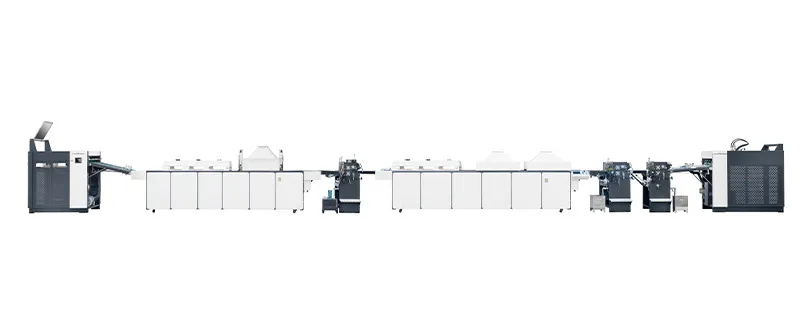
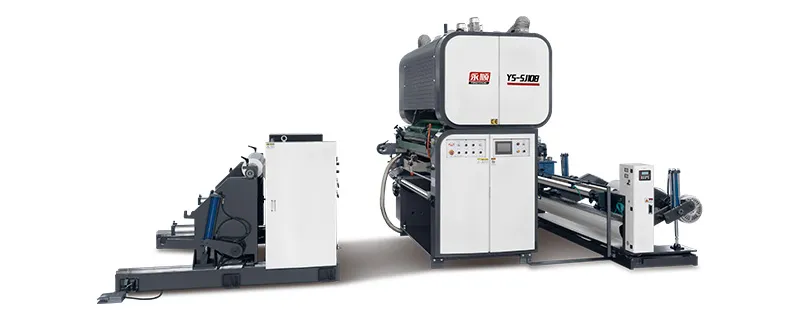
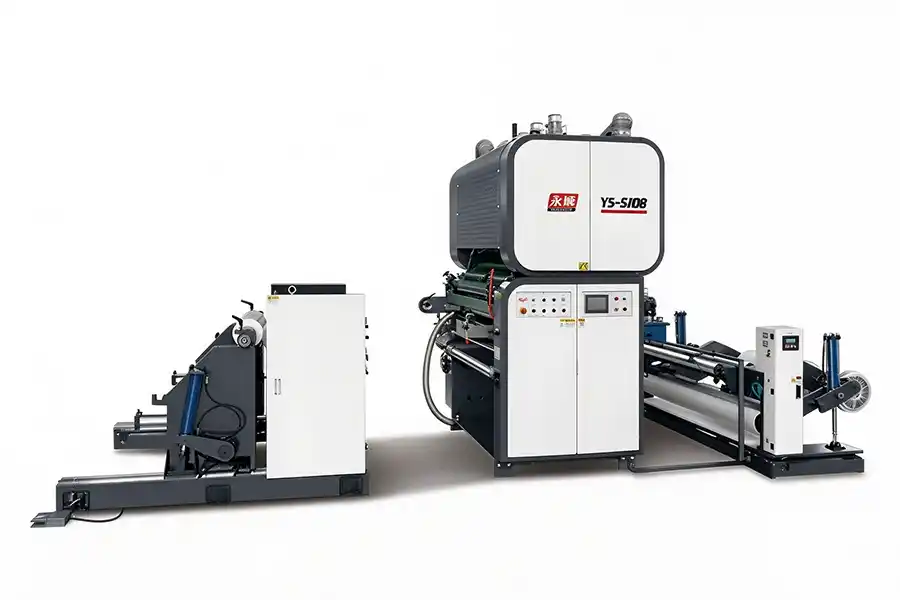
Roll-to-roll lamination feeds substrate from a continuous roll. The material moves through the laminating nip without interruption, and the finished output is either rewound onto a take-up roll or cut to length in-line. Because the material never stops, tension can be regulated continuously across the entire web width, and the machine can run for extended periods with minimal operator intervention.
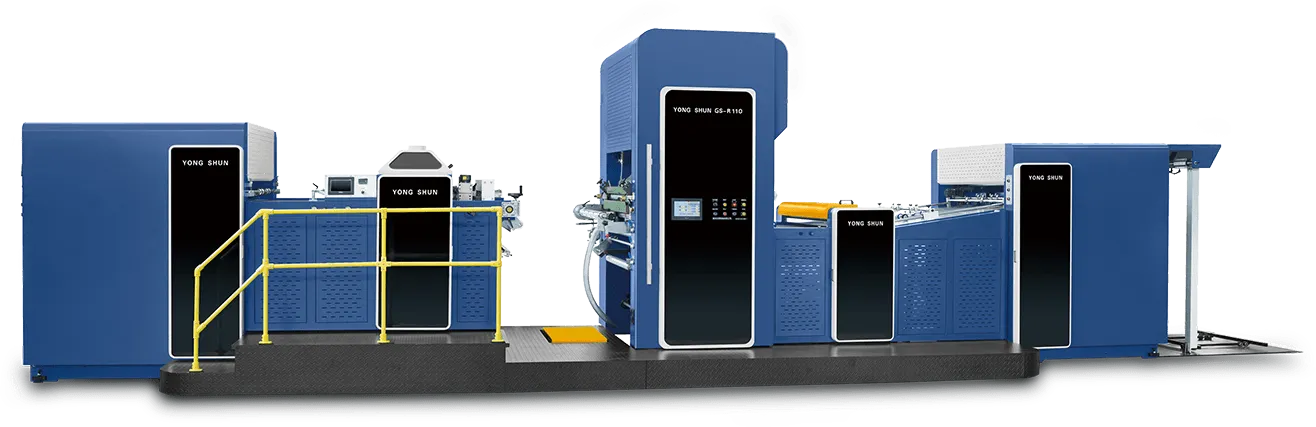
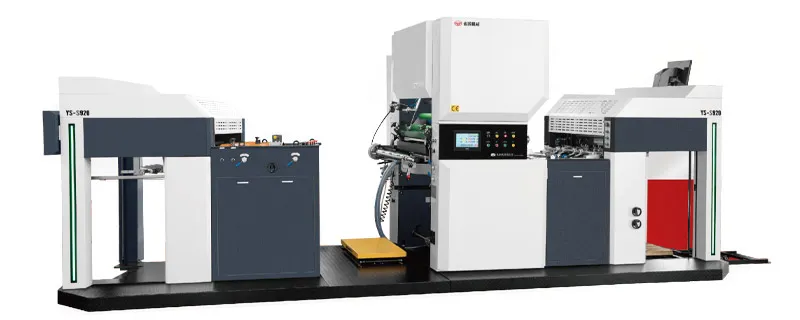
Sheet-to-sheet lamination processes individual, pre-cut sheets one at a time. Each sheet is fed—manually or by an air-suction automatic feeder—through the laminating rollers and exits as a finished, ready-to-stack piece. The machine’s rhythm is inherently intermittent: feed, laminate, exit, repeat.
This distinction cascades into every downstream consideration: throughput profile, waste pattern, operator skill requirement, changeover time, floor space, and capital cost. The roll-to-roll lamination platform is designed around continuous web handling, while sheet-fed systems prioritize registration and per-sheet precision.
The market trajectory reinforces the growing importance of the roll-to-roll format. The fully automatic roll-to-roll laminator market is projected to grow from US197.63millionin2025toUS197.63millionin2025toUS 351.74 million by 2032, at a compound annual growth rate of 8.58%. This growth is driven by demand for consistent interlayer alignment, web tension control, and repeatable surface finishing in packaging, labels, and industrial materials.
| Dimension | Roll-to-Roll Lamination | Sheet-to-Sheet Lamination |
|---|---|---|
| Material input | Continuous roll | Individual pre-cut sheets |
| Throughput profile | Continuous, high-volume; no stop-start for sheet loading | Intermittent; output limited by feed cycle |
| Best-fit output | Banners, signage, vehicle graphics, flexible packaging film, labels | Business cards, book covers, menus, packaging cartons, short-run digital prints |
| Waste pattern | Lower per-unit waste on long runs; startup and changeover waste concentrated at roll ends | Sheet-by-sheet scrap; misalignment or double-feeds create individual rejects |
| Tension control | Continuous closed-loop tension regulation across the full web width; variations in substrate thickness or elasticity require active compensation | Tension is applied per sheet at the nip; less influenced by roll-to-roll tension dynamics but more sensitive to sheet flatness |
| Changeover | Changing web width or material type requires unwind/rewind reconfiguration and tension recalibration | Sheet size changes can be faster on modern machines with automatic sheet-length recognition |
| Floor space | Larger footprint; requires roll storage | More compact; no roll storage requirement |
| Upfront investment | Higher, driven by unwind/rewind units and tension control systems | Lower to mid-range |
| Operator intervention | Minimal during a long run | Moderate; loading, alignment, and unload per batch |
The tension dimension deserves closer attention because it is the variable most often underestimated in roll-to-roll evaluation. In web-handling systems, servo-controlled rollers regulate rotation velocity or torque, and web tension and transportation velocity control directly determine final product quality. If film enters the laminating nip with inconsistent tension, the result is discontinuous film stretch near the nip, which generates scrap and undermines the machine’s stretch-control function. For a converter running thin-gauge PET or elastic flexible films, tension control is not a secondary feature—it is the primary quality mechanism.
Sign and wide-format print shops are the clearest case. Banners, vehicle wraps, wallpaper, and outdoor signage are produced in roll form from the start; laminating them in the same format avoids the extra step of sheeting before lamination and re-trimming afterward. The economic logic is straightforward: once a roll is loaded, the machine can run for extended periods with little operator intervention, and the per-unit cost drops on long runs because there is no per-sheet loading time.
Flexible packaging and label converters are a second strong fit. When the downstream process expects roll stock—for printing, slitting, or rewinding—laminating in roll format preserves the material’s continuous handling and eliminates the need to reintroduce sheets into a web process.
Commercial and digital print shops operate on pre-cut sheets from offset or digital presses. Business cards, book covers, menus, and packaging inserts arrive as finished sheets; laminating them sheet-to-sheet avoids unnecessary roll handling and keeps the workflow aligned with upstream and downstream equipment.
Sheet-fed lamination also carries an edge in registration precision. Individual sheets lie flat at the nip, which reduces feeding-related defects and produces cleaner edge alignment on small-format work where graphic positioning is visible and consequential. For decorative laminates or packaging where the lamination edge must align with a printed border or die-cut line, this per-sheet control can outweigh the throughput disadvantage.
The trade-off is volume. Sheet-fed systems are slower per unit because each piece is processed individually, and the intermittent feed cycle imposes a ceiling on hourly output that no amount of roller-speed increase can remove. The compensation is precision and versatility—capabilities that matter most when job sizes vary and finish types change from order to order.
Packaging and label converters frequently need both formats: roll-to-roll for in-line finishing on long production runs, and sheet-fed for short-run sample or proof work. Print shops handling mixed formats commonly run both machine types side by side rather than forcing one machine to cover every job type. This is not indecision; it is recognition that feed format is a structural property of the production workflow, not a feature that can be retrofitted economically.
For converters whose lamination output feeds into specific downstream processes, the industrial lamination applications overview maps common production scenarios to the feed formats and machine configurations that typically serve them.
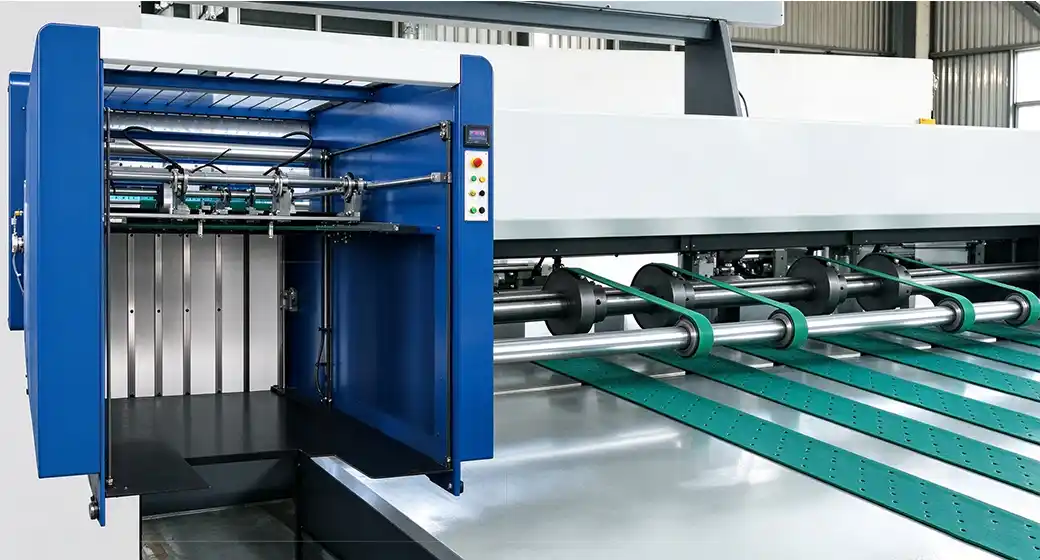
Before evaluating any machine, confirm what arrives at the laminating station and what leaves it. If material arrives in roll form and downstream equipment expects roll form, sheet-fed lamination introduces an unnecessary sheeting step. If material arrives as pre-cut sheets and downstream processes operate sheet-by-sheet, roll-to-roll lamination requires either a sheeter or a rewind step that may not align with the existing workflow. The feed format should mirror the input format, not fight it.
A sheet-fed machine rated at a certain linear speed does not produce the same hourly output as a roll-to-roll machine running at the same linear speed, because the sheet-fed machine loses time on every feed cycle. Calculate expected hourly output using your actual sheet size, feed rate, and changeover frequency—not the mechanical speed on the datasheet. For roll-to-roll, calculate based on web width, roll length, and realistic tension-limited running speed for your substrate.
Roll-to-roll waste concentrates at startup, roll changes, and changeovers; within a long run, per-unit waste can be very low. Sheet-fed waste is distributed across the batch, driven by misalignment, double-feeds, and per-sheet rejects. The format with lower average waste may not be the format with lower waste on your job mix. Run the numbers on your smallest and largest typical orders, not a theoretical mid-range run.
If roll-to-roll is the direction, verify that the machine’s tension control system is rated for the full range of substrates you intend to run. Thin films, elastic materials, and substrates with thickness variation demand active closed-loop tension regulation across unwind, lamination, and rewind. A machine that performs well on one film may produce wrinkles or registration drift on another if tension control is not adequately specified.
Roll-to-roll changeover from one web width or material to another requires unwind/rewind reconfiguration and tension recalibration; sheet-fed changeover requires feeder adjustment and registration setup. The format with lower changeover time depends on how frequently your job mix shifts and how much of that shift involves size, material, or film changes. Ask for realistic changeover times for your specific transition patterns, not a single “average” figure.
Yongshun maintains a quality assurance system and CE certification covering the manufacturing and testing processes for its laminating machine range, including roll-to-roll and sheet-fed configurations. The company’s service and support framework covers installation, commissioning, spare parts, and online technical consulting for both feed formats.
Once the feed format direction is settled, the remaining variables narrow: maximum web or sheet width, substrate thickness range, film compatibility, tension or registration specifications, and automation level. The format decision eliminates roughly half of the available machine configurations before a single model specification is compared.
For buyers who have already narrowed to sheet-fed lamination and need to evaluate cutting systems—hot knife, disc knife, or chain knife—the three-system cutting comparison works through edge quality, film compatibility, and throughput trade-offs.
This article is part of YONGSHUN’s technical content library. No direct sales or pricing information is included. All technical discussions aim to help you make informed purchasing decisions.
GET A QUOTE