English
 Español
Explore the complete industrial film lamination process. From paper and film material selection to the 9-step workflow a...
Nov 02,2026


The industrial film lamination process involves bonding a protective or decorative plastic film to a printed substrate. It typically includes substrate preparation, continuous sheet or web feeding, film unwinding, adhesive activation via heat or glue, high-pressure nipping, precision slitting, and final stacking. The exact configuration depends on the substrate weight, film type (PET, BOPP, OPP), required surface finish, and downstream die-cutting or folding requirements.
Industrial film lamination is a post-press finishing process that applies a thin layer of plastic film to a printed sheet or continuous roll. The primary purpose is to enhance the physical and visual properties of the printed material.
Unlike varnishing, which applies a liquid coating that cures on the surface, lamination uses a solid plastic film bonded to the substrate. This physical layer provides distinct advantages: it significantly increases tear resistance, offers superior protection against moisture, chemicals, and UV fading, and can introduce specialized tactile effects (such as soft-touch or matte finishes). Functionally, it also thickens the material, improving its rigidity for packaging applications.
The process can be broadly categorized into three main bonding methods:
Thermal Lamination (Pre-coated film): The film already carries a heat-activated adhesive layer. The machine applies heat and pressure to melt the adhesive and bond the film to the paper.
Wet Lamination (Water-based glue): The machine applies a water-based adhesive to the paper before the film is pressed onto it. The water evaporates as the sheet travels through heated drying rollers.
Solventless/Non-adhesive Lamination: The film itself is heated to a melting point and pressed directly onto the substrate, often used for specialized packaging where traditional adhesives are prohibited.
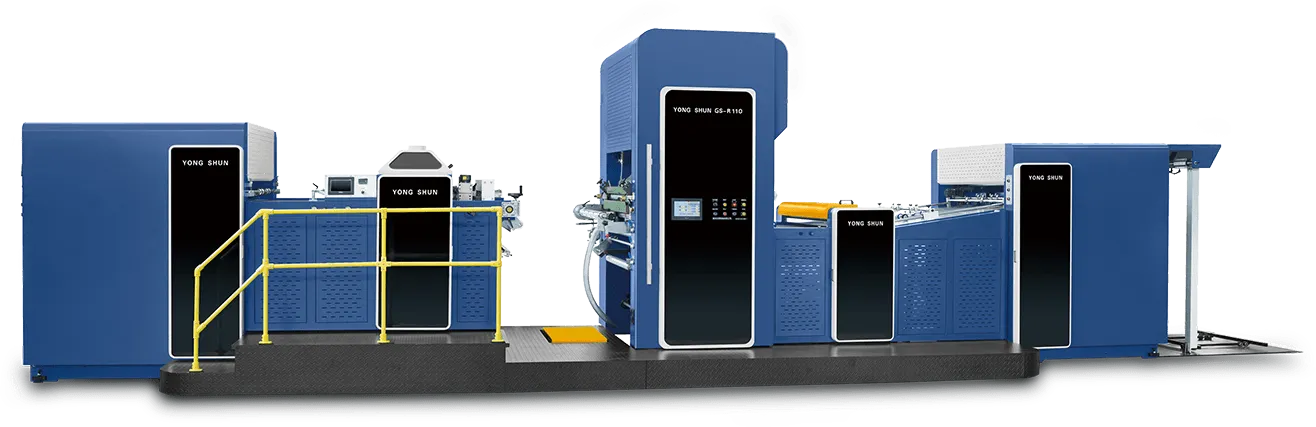
For packaging converters looking to integrate this process into their existing workflow, understanding the broader criteria for selecting the right laminating machinery is essential before choosing specific equipment.
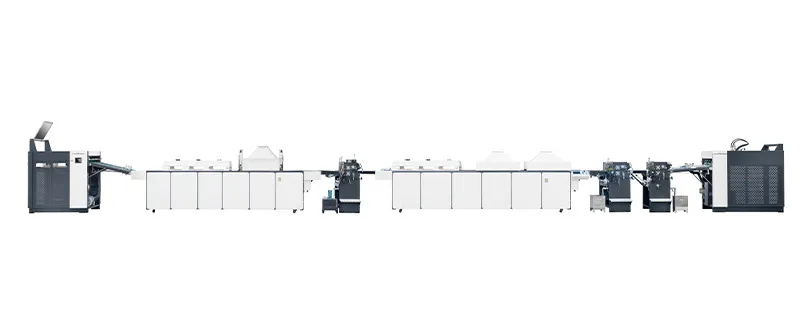
A modern industrial lamination line operates as a continuous, highly synchronized system. Regardless of whether the machine handles individual sheets or continuous webs, the process follows a logical 9-step sequence.
1. Printed Sheet Preparation
Before the substrate enters the laminator, the ink must be completely dry. If UV inks or heavy coverage offset inks are not fully cured, the heat and pressure of the laminating nip can cause the ink to offset onto the rollers or cause delamination. The paper must also be checked for flatness; curled sheets will jam the feeder.
2. Paper Feeding
Sheets are stacked on the feeder pile and separated by air-suction mechanisms. High-speed industrial machines use servo-driven front lays and double-sheet detectors. A misaligned feed at this stage will cause the film to miss the sheet edge, resulting in wraps around the lamination rollers—a costly downtime event.
3. Film Unwinding
The laminating film is mounted on an unwind shaft. Tension must be precisely controlled as the roll diameter decreases. If tension is too low, the film will wrinkle; if too high, it will stretch and distort the printed graphics.
4. Heating or Adhesive Activation
This is the core of the chemical process. For thermal films, heated rollers (often reaching 90°C–110°C) activate the adhesive. Modern machines combine electromagnetic and oil heating to maintain temperature fluctuations within ±1°C. For water-based systems, the adhesive is applied via an anilox roller or steel roller system before entering the drying tunnel.
5. Lamination Pressure
Immediately after heating, the sheet and film pass through the lamination nip (the point where two heavy rollers meet). The pressure applied here squeezes out trapped air and forces the adhesive into the microscopic pores of the paper. Uniform pressure across the entire width is critical; uneven pressure leads to bubbles and poor adhesion.
6. Edge Trimming or Slitting
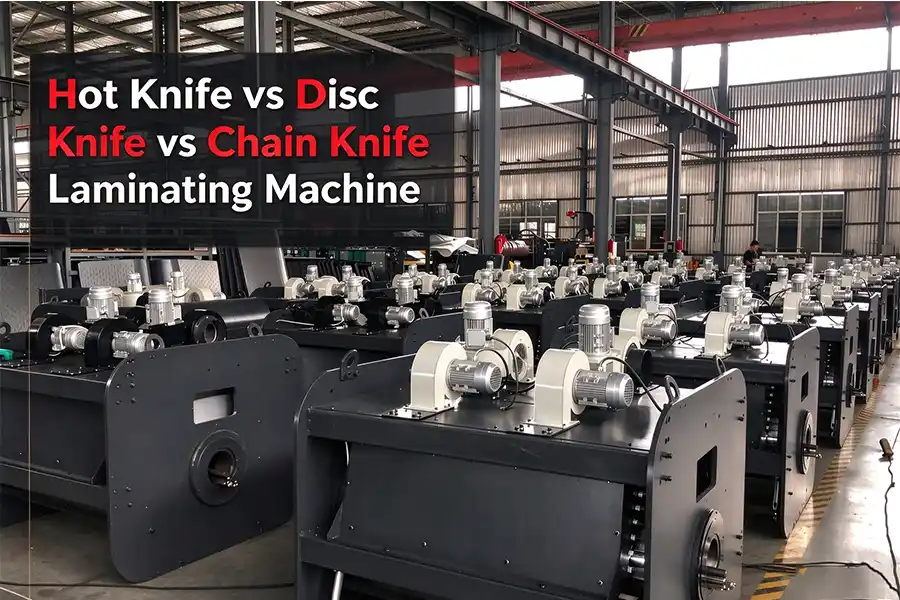
Once bonded, the continuous film must be separated between sheets (for sheet-fed machines) or trimmed to width (for roll-to-roll). This is achieved using a hot knife, chain knife, or disc knife. The choice of cutting system directly impacts edge quality and downstream feeding.
7. Pressing (Optional but Recommended)
For high-end packaging, the sheet passes through a secondary hot-pressing unit. This step eliminates micro-bubbles and dramatically improves surface gloss, creating a mirror-like finish critical for luxury boxes.
8. Delivery and Stacking
Finished sheets are stacked using an automatic delivery system. Modern stackers feature three-side alignment, batch counting, and automatic waste ejection to minimize manual labor.
9. Quality Inspection
Operators inspect the batch for adhesion strength, wrinkles, and edge quality. For high-volume production, inline cameras can monitor for defects in real-time.
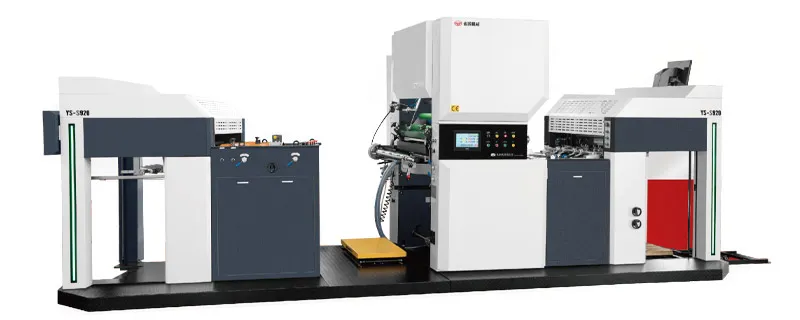
If you are looking to evaluate how these steps translate into different machine configurations, the detailed overview of automatic film laminating machines breaks down the mechanical architecture required for each stage.
The choice of film dictates the machine settings and the final application. Here is a comparative breakdown of the most common industrial lamination films.
| Film Material | Key Characteristics | Typical Applications | Processing Considerations |
|---|---|---|---|
| BOPP | Excellent clarity, high tensile strength, moisture barrier. | Commercial print, book covers, cartons, menus. | Highly versatile; works well with hot knife and disc knife cutting. |
| PET | Superior temperature resistance, high gloss, strong chemical resistance. | Luxury packaging, cosmetic boxes, outdoor posters. | Requires higher heat to seal; hot knife is preferred for clean, tail-free edges. |
| OPP | Good stiffness and clarity, cost-effective. | General packaging, brochures, tags. | May become brittle in cold environments; needs precise tension control. |
| PVC | High shrink rate, excellent clarity, easy to weld. | Box windows, specialized packaging, promotional items. | Heat-sensitive; requires strict temperature control to avoid yellowing. |
| PLA | Biodegradable, compostable, plant-based. | Eco-friendly food packaging, sustainable brands. | Lower melting point; requires specialized low-temperature heating and water-based adhesives. |
| Metallized Film | Reflective, metallic finish, excellent light/UV barrier. | Cosmetic boxes, luxury labels, promotional signage. | Can crack or silver-streak if pressure is too high; precision tension is critical. |
Note: The adhesive type (water-based vs. thermal pre-coated) must be compatible with both the substrate and the film to ensure a permanent bond.
Industrial lamination is executed via two primary formats. The choice between them represents a structural decision based on the manufacturing workflow, not just a machine preference.
Sheet-to-Sheet Lamination
This process handles pre-cut, individual sheets. The substrate is fed from a stack, laminated, cut, and stacked back into a neat pile.
Best for: Commercial printing, short-run packaging, folding cartons, and business cards.
Advantages: High precision registration, ability to process varying sheet sizes quickly, and easy integration with standard offset or digital presses.
Challenges: The intermittent feed cycle limits absolute throughput speed. Ensuring sheet flatness before feeding is critical to prevent jams.
Roll-to-Roll Lamination
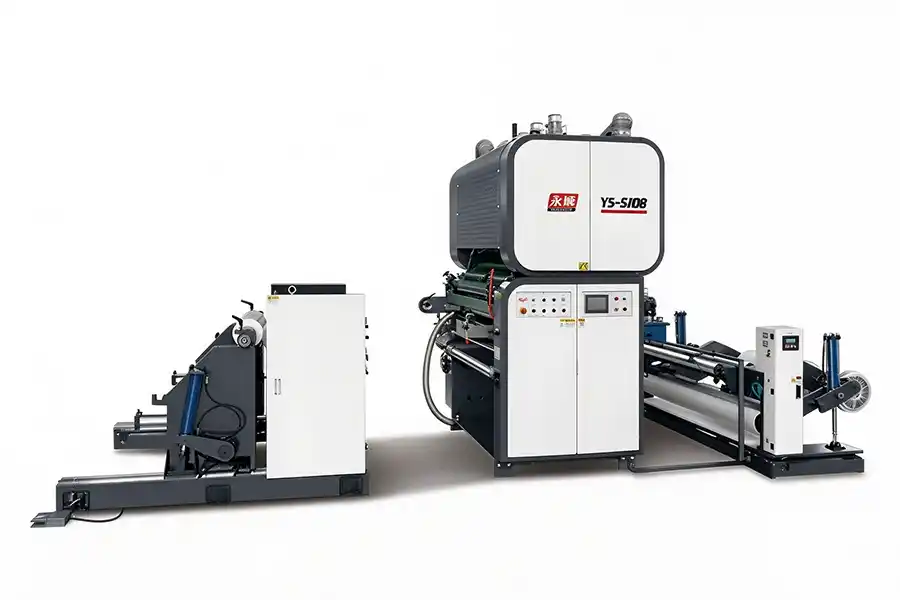
Here, the substrate is fed from a continuous roll through the laminator and rewound onto a take-up roll (or cut inline).
Best for: Flexible packaging, wide-format signage, labels, and continuous production runs.
Advantages: Extremely high throughput, continuous tension control, and minimal operator intervention during long runs.
Challenges: Demands advanced web tension management. As the unwind roll shrinks and the rewind roll grows, the machine must constantly adjust torque to prevent web breaks or stretching.
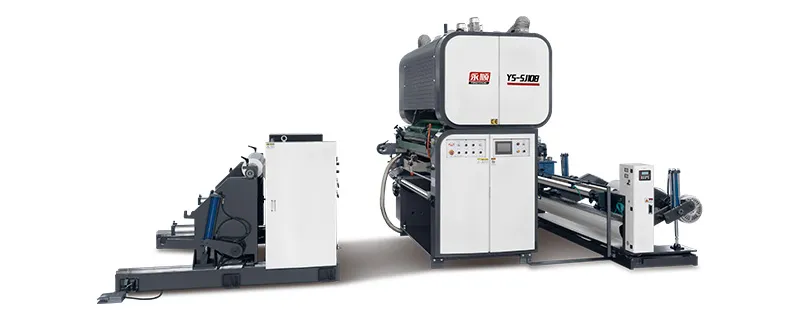
For operations requiring continuous web handling, exploring the mechanics of a dedicated roll-to-roll lamination platform reveals how these tension and alignment challenges are engineered out.
The versatility of the lamination process allows it to serve a vast spectrum of industries. The industry applications of laminating solutions span from everyday commercial print to highly specialized packaging.
Folding Cartons & Color Boxes: Lamination provides the structural rigidity and scuff resistance needed for consumer goods. For luxury brands, hot knife lamination ensures the sealed edges do not peel during gluing.
Rigid Gift Boxes: High-gloss PET film combined with hot pressing creates a mirror finish that elevates the perceived value of cosmetics and electronics.
Books and Magazines: Matte or soft-touch lamination protects covers from fingerprints and wear while providing a premium tactile experience.
Posters and Commercial Signage: Thick films protect outdoor advertising from UV fading, rain, and wind tear.
Handbags and Shopping Bags: Lamination strengthens paper handles and prevents tearing at stress points.
Labels: Roll-to-roll lamination protects product labels from moisture and chemical abrasion in retail and industrial environments.
Even with advanced machinery, lamination defects can occur. Understanding the root cause is the first step to resolution.
1. Bubbles (Air Trapped)
Possible Causes: Uneven roller pressure, insufficient heating, or dusty paper surfaces.
Check Steps: Verify the nip pressure across the width of the roller. Check the temperature of the heating drum. Inspect the paper dust removal system.
Adjustment: Increase pressure or temperature slightly. Clean or replace the dedusting brushes.
2. Wrinkling (Film Folds)
Possible Causes: Uneven film tension, misalignment of the film web, or curled paper.
Check Steps: Inspect the unwind tension control. Ensure the film is perfectly parallel to the sheet.
Adjustment: Recalibrate the tension sensors. Check the paper conditioning prior to lamination to ensure flatness.
3. Delamination (Film Peeling)
Possible Causes: Insufficient heat, incompatible adhesive, or ink contamination on the paper.
Check Steps: Test the bond by attempting to peel the film immediately off the sheet.
Adjustment: Increase the laminating temperature or slow down the machine speed to increase dwell time in the hot nip.
4. Uneven Edges (Tail Film)
Possible Causes: Dull knife, incorrect knife temperature (for hot knives), or improper chain tension.
Check Steps: Inspect the cutting edge under a magnifier.
Adjustment: Replace or sharpen the blade. For hot knives, verify the blade temperature is sufficient to melt the specific film.
5. Film Stretching
Possible Causes: Excess tension on the unwind roll, especially when running at high speeds.
Check Steps: Observe the film between the unwind roll and the lamination nip. Does it look wavy or narrowed?
Adjustment: Reduce the unwind tension. Ensure the tension control system is in automatic closed-loop mode.
Selecting the right machine configuration requires mapping your specific production demands to the technical capabilities of the equipment.
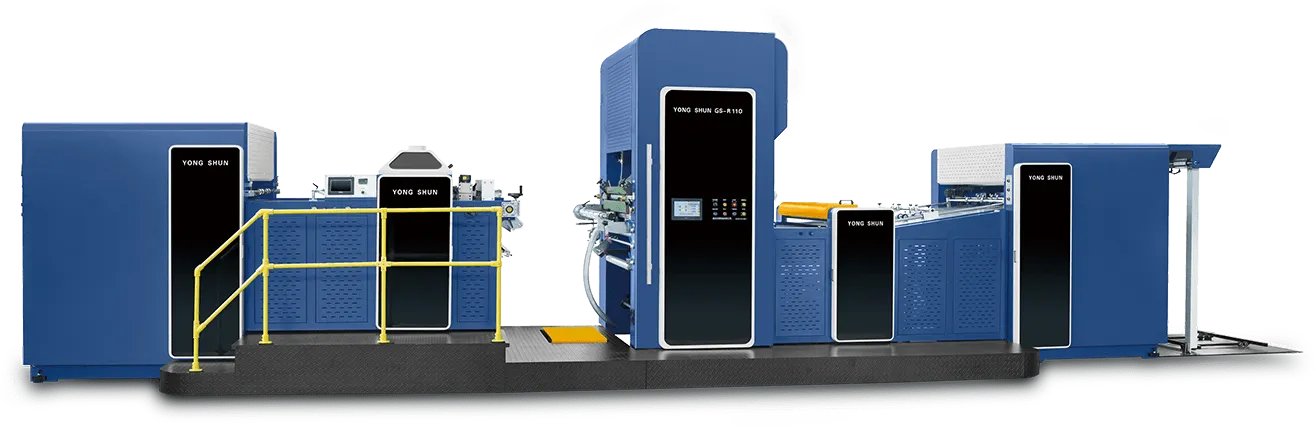
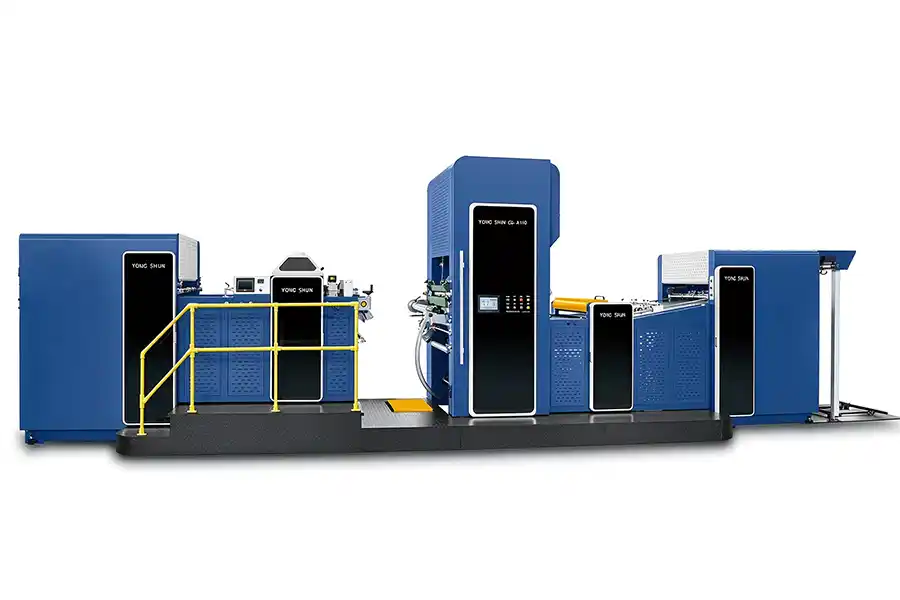
If your primary output is folding cartons and luxury boxes requiring perfect edge sealing, a machine equipped with a hot knife cutting system is necessary. The heat seals the film, preventing it from peeling back during die-cutting or folder-gluer operations.

If you are producing packaging with transparent windows, standard laminators will coat over the window, ruining the design. You need a dedicated window laminating machine that precisely registers and applies film only to the window area.

If your business frequently switches between water-based, pre-coated, and non-adhesive films for different clients, a multi-purpose chain knife laminator offers the flexibility to handle varied jobs without requiring multiple machines.

For a holistic view of how to integrate these machines into a complete production line, and to address specific environmental or output challenges, reviewing tailored industrial laminating solutions can clarify the best equipment combination.
Before signing off on a production batch, operators should run through this standard QC checklist:
Adhesion Strength: Can the film be peeled back with light finger pressure? (Should be virtually impossible).
Surface Flatness: Are there any visible bubbles, wrinkles, or trapped dust particles?
Edge Quality: Is the cut clean and free of jagged tails? Does the edge seal well?
Transparency/Gloss: Is the finish uniform across the entire sheet? Are there matte or shiny patches?
Dimensional Stability: Has the paper curled or shrunk significantly after cooling?
Film Compatibility: Does the film type match the job ticket (e.g., matte vs. gloss, PET vs. BOPP)?
Downstream Performance: Test-run a few sheets through the die-cutter or folder-gluer. Does the laminated edge crack or jam?
What materials can be laminated?
Almost any printable substrate can be laminated, including offset paper (80gsm to 500gsm), cardboard, corrugated board, digital print stock, and synthetic papers. The key is matching the film adhesive and machine heating capability to the substrate's thickness and porosity.
What causes bubbles during lamination?
Bubbles are primarily caused by trapped air or moisture. This occurs when paper dust is not removed, roller pressure is uneven, or the heating temperature is too low to fully melt the adhesive. Ensuring proper paper conditioning (letting it acclimatize to the factory environment) and regular roller maintenance are key preventatives.
Is roll-to-roll lamination suitable for paper packaging?
Yes, provided the paper is supplied in roll form. Roll-to-roll lamination is highly efficient for high-volume flexible packaging and label production. However, for traditional sheet-fed offset printing, sheet-to-sheet lamination is usually more practical as it aligns with the press output format.
How does paper weight affect lamination?
Thin paper (under 100gsm) is prone to curling and wrinkling under heat and tension, requiring machines with advanced anti-curl systems and precise tension control. Thicker board (over 300gsm) requires higher pressure to ensure the film adheres firmly into the rough surface of the cardstock.
What is the difference between thermal and cold lamination?
Thermal lamination uses heat-activated adhesives (pre-coated films) and heated rollers to bond the film. Cold lamination uses pressure-sensitive adhesives that bond at room temperature. Thermal offers a stronger, more durable bond suitable for industrial packaging, while cold is often used for heat-sensitive materials or low-volume document protection.
Ready to optimize your lamination line?
Review the full range of automatic film laminating machines to compare configurations, speeds, and cutting systems.
Looking for a tailored production workflow?
Explore our customized lamination solutions to see how different machine setups integrate into specific packaging and commercial print environments.
Need to discuss your specific material challenges?
Our technical team can review your substrate, film, and output requirements to help you find the right fit. Contact us to share your production parameters.
This article is part of YONGSHUN’s technical content library. No direct sales or pricing information is included. All technical discussions aim to help you make informed purchasing decisions.
GET A QUOTE